

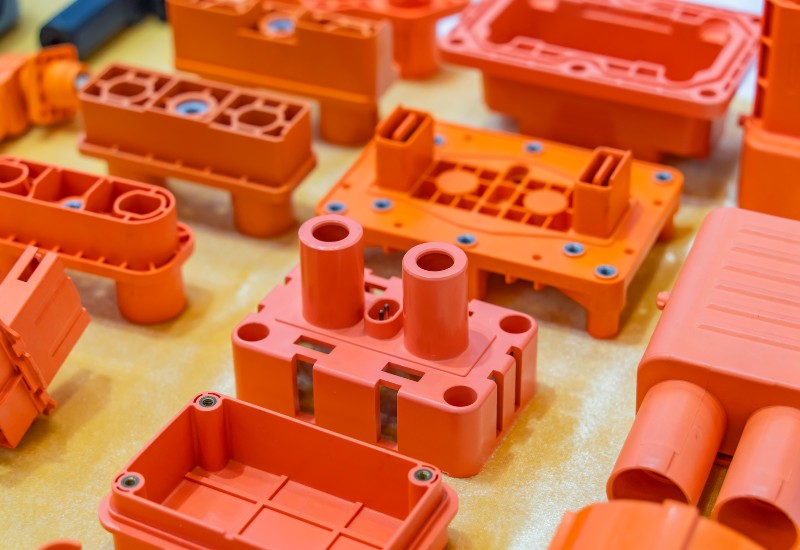
A successful injection plastic molding project starts well before plastic enters the mold. Engineering decisions made during product development can affect manufacturability, part quality, production efficiency, tooling requirements, and the overall success of the finished component.
For manufacturers developing a new plastic part or refining an existing one, bringing engineering considerations into the process early can help identify potential problems before they become expensive to address.
Why Engineering Matters in Injection Molding Success
Injection molding brings together several variables, including part geometry, material selection, mold design, processing conditions, and production requirements. A change in one area can affect the others.
For example, a part designed without sufficient attention to wall thickness or draft may create challenges during molding. Similarly, selecting a material without considering its performance requirements can affect how the finished component performs in its intended application.
Good engineering is therefore not simply about making a part that can be molded. It is about developing a design that makes sense for the material, tooling, manufacturing process, and requirements of the finished product.
Engineering Factors That Improve Your Injection Molding Project
Several engineering considerations deserve attention during the development of an injection molding manufacturing project. Addressing them early can make the transition from design to production more straightforward.
Part Design & Geometry
Part geometry has a direct relationship with how a component fills, cools, and releases from a mold. Features such as wall thickness, ribs, bosses, corners, and openings should be evaluated as part of the overall design.
A well-considered geometry can make the part easier to manufacture while also helping achieve the desired functional requirements.
Material Selection
The material needs to match the conditions the finished part will encounter. Depending on the application, engineers may need to consider characteristics such as strength, flexibility, impact resistance, temperature exposure, chemical resistance, dimensional stability, and appearance.
Material selection should also account for how the resin behaves during the injection molding process. Different plastics can have different processing characteristics, so the material and manufacturing approach need to be considered together.
Wall Thickness
Consistent wall thickness can be an important consideration in molded part design. Significant changes in thickness can influence cooling and may contribute to dimensional or cosmetic issues.
That does not mean every component needs perfectly uniform walls. Rather, designers should consider transitions carefully and use appropriate geometry where different thicknesses are necessary for the function of the part.
Draft Angles
Draft allows molded components to be removed from the mold more easily. Without adequate draft, a part may have difficulty releasing from the mold, particularly when surfaces contain textures or other features.
The appropriate amount of draft depends on factors such as the material, surface finish, depth of the feature, and mold design. It should be considered during the initial design stage rather than treated as an afterthought.
Gate Location
The location where molten plastic enters the mold can influence filling, appearance, weld lines, and other aspects of the finished component.
Gate placement should be evaluated alongside the part geometry and material. For visible components, the location may also be an important cosmetic consideration.
Cooling & Cycle Time
Cooling is an important part of the molding cycle because the plastic needs to reach an appropriate condition before the part can be ejected. Part thickness, material properties, mold design, and cooling system considerations can all influence how quickly the component cools.
Engineers can evaluate these factors when looking for ways to improve production efficiency without compromising the requirements of the part.
Mold Design
The mold needs to accommodate the geometry and requirements of the component. Mold design considerations can include parting lines, gates, runners, cooling, ejection, vents, and other tooling features.
Thinking about the mold while the part is still being designed can help identify features that may be difficult to manufacture or that could require unnecessary tooling complexity.
Tolerances & Functional Requirements
Not every feature needs the same dimensional tolerance. Applying unnecessarily tight tolerances can make manufacturing more difficult without providing a meaningful benefit to the finished product.
Engineers should identify which dimensions are critical to the part’s function and establish requirements accordingly. This can help balance performance and manufacturability.
Prototyping & Design Review
Reviewing a design before committing to production tooling can provide an opportunity to identify potential concerns. Depending on the project, prototyping, engineering analysis, or other evaluation methods may be appropriate.
The goal is to find issues while changes are still manageable. A design review can also give the manufacturing team an opportunity to provide input based on the planned production process.
Choosing an Injection Molding Partner With Engineering Experience
Engineering does not stop when a design file is complete. The manufacturing partner also plays an important role in turning that design into a repeatable production process.
When evaluating industrial injection molding providers, manufacturers should consider more than equipment alone. Look for a partner that understands material selection, tooling, part design, processing requirements, and quality considerations.
Clear communication is also important. Engineers, designers, and manufacturing teams need to understand the same requirements and know which characteristics are most important to the finished component.
For companies developing injection molded plastics, that collaboration can help connect product design with practical manufacturing considerations.
Put Engineering to Work Before Production Begins
The most effective time to address potential molding problems is before production tooling is complete. Reviewing part geometry, materials, tolerances, tooling, and processing requirements early can help create a more practical path to production.
Design Plastics works with manufacturers on custom plastic component development and manufacturing. If you are evaluating a new part, refining an existing design, or planning an injection plastic molding project, contact Design Plastics to discuss your requirements and explore the available manufacturing options.
Frequently Asked Questions About Injection Molding Engineering
Engineering questions often come up throughout product development, particularly when a part needs to balance performance with manufacturability. Here are answers to several common questions.
What Is the Most Important Factor in an Injection Molding Project?
There is not one factor that determines every project’s success. Part design, material selection, tooling, processing conditions, tolerances, and production requirements all need to work together. Addressing these considerations early can help reduce potential manufacturing problems.
How Does Material Selection Affect Injection Molding Results?
Material selection affects how the plastic processes and how the finished part performs. Strength, flexibility, temperature resistance, chemical exposure, dimensional stability, and other characteristics may need to be considered based on the application.
How Can Injection Molding Cycle Times Be Reduced?
Cycle time can be influenced by factors such as part geometry, material, mold design, cooling, and processing conditions. Engineering teams can evaluate these variables to identify potential efficiency improvements while maintaining the required part quality.
What Should Companies Look for in Injection Molding Partners?
Companies should consider engineering experience, manufacturing capabilities, material knowledge, tooling resources, quality processes, communication, and experience with projects similar to their own. A strong manufacturing partner should be able to discuss manufacturability as well as production.