

When a flat sheet of thermoplastic needs to become a three-dimensional part, manufacturers have several forming methods to consider. Two of them are vacuum forming and drape forming. While both methods use heat to make plastic pliable before shaping it, the way the material is formed is different.
Understanding the distinction between the vacuum forming process and drape forming process can help engineers, product developers, and purchasing teams determine which approach makes sense for a particular application. The right choice depends on factors such as part geometry, material behavior, tooling, production requirements, and the desired result.
What Is Vacuum Forming?
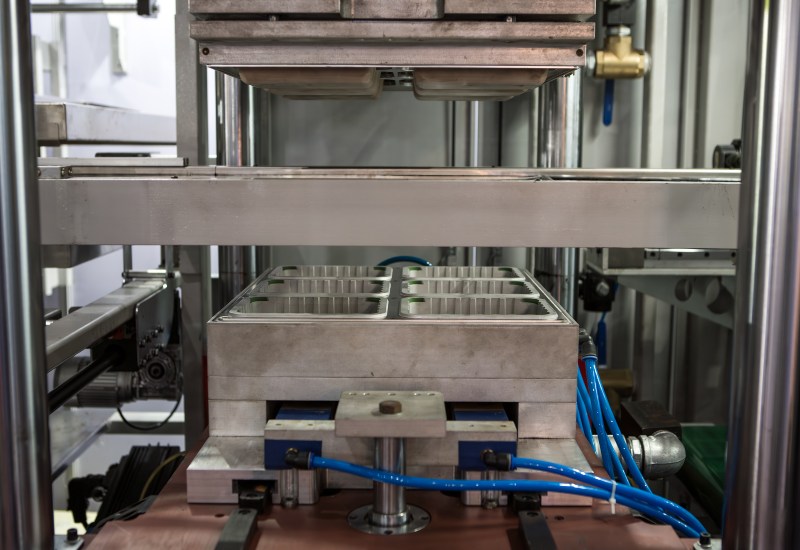
So, what is vacuum forming? Vacuum forming is a thermoplastic forming process in which a plastic sheet is heated until it becomes flexible and then positioned over or around a mold. A vacuum is applied to draw the heated sheet against the mold surface, allowing the material to take on its shape.
The mold establishes the basic geometry of the finished part, while atmospheric pressure and the vacuum help pull the material into contact with the tooling. Once the plastic cools and becomes rigid again, it can be removed from the mold and undergo additional fabrication steps if required.
Vacuum forming is commonly considered for parts that need consistent shapes across multiple production runs. The process can also be useful when manufacturers need to form relatively large plastic components without using the same type of tooling associated with some other molding methods.
What Is Drape Forming?
Drape forming is another thermoplastic forming method, but instead of relying primarily on vacuum pressure to pull the sheet against a mold, the heated plastic is positioned over a form and allowed to drape around its contours.
The drape forming process can provide greater control over how the material conforms to a shape. This can be particularly useful for applications where controlling material distribution is important.
In drape forming plastic applications, the heated sheet is carefully positioned and formed over the tooling. The material is then cooled so that it retains the desired geometry.
Key Differences Between Vacuum Forming and Drape Forming
Although the two processes share some basic principles, several differences can influence which method is appropriate.
Forming Method
The primary difference is how the heated sheet is brought into contact with the tooling. Vacuum forming uses vacuum pressure to pull the material against the mold. Drape forming relies more directly on positioning and mechanically guiding the heated sheet over the form.
Material Distribution
Material distribution can be an important consideration when comparing the two methods. As a sheet stretches during forming, its thickness can change in different areas. Drape forming may provide greater control over where the material moves during forming, depending on the part geometry and process.
Part Geometry
The shape of the finished component also matters. Vacuum forming can be useful for many three-dimensional shapes, particularly when the tooling and draft requirements are compatible with the process. Drape forming can be considered for shapes where controlled material placement is especially important.
Tooling
Tooling requirements differ between the two processes. Vacuum forming requires tooling that allows the heated sheet to be drawn against the mold, including provisions for applying vacuum. Drape forming uses a form over which the heated material is positioned and shaped.
Process Control
Both methods require careful control of heating, forming, and cooling. However, the specific process controls and considerations differ because the material responds differently depending on how it is brought into contact with the tooling.
Production Requirements
The expected production volume, part geometry, material, and tooling requirements can all influence the appropriate process. Neither method should automatically be considered the better option for every application.
Industries That Use Vacuum Forming
Vacuum forming can be used in a variety of B2B manufacturing environments where formed thermoplastic components are needed. Potential applications include:
- Industrial equipment components
- Automotive components
- Protective covers and enclosures
- Transportation-related parts
- Product housings
- Packaging and display components
The suitability of vacuum forming depends on the specific part, material, tooling, and production requirements.
Industries That Use Drape Forming
Drape forming is also used across industrial applications where thermoplastic sheets need to be shaped over tooling. Potential applications can include:
- Aerospace-related components
- Transportation applications
- Industrial equipment
- Large formed plastic components
- Specialized product development and prototyping
As with vacuum forming, the actual suitability of the process depends on the project’s requirements and the materials and equipment involved.
How to Choose Between Vacuum Forming and Drape Forming
Choosing between the two methods starts with understanding the part rather than selecting a process based on a single characteristic. Consider the part geometry first. Complex contours, deep shapes, tight areas, and other design features may influence which forming method is practical.
Next, consider material requirements. Different thermoplastics behave differently when heated and formed, so the selected material should be evaluated alongside the intended process. Tooling requirements should also be reviewed. The tooling approach can affect how the part is formed and how easily the desired geometry can be achieved.
Finally, consider production goals and consistency requirements. A manufacturer can evaluate the expected volume, repeatability, part dimensions, finishing requirements, and other project-specific factors before selecting the forming method. For B2B projects, discussing these details with an experienced plastics manufacturer can help identify potential process considerations before production begins.
Choosing the Right Plastic Forming Process
Vacuum forming and drape forming can both turn thermoplastic sheets into useful three-dimensional components, but they accomplish that goal in different ways. The vacuum forming process uses vacuum pressure to draw heated material against tooling, while the drape forming process shapes heated material over a form with greater emphasis on controlled placement.
If you are evaluating vacuum forming or drape forming for an industrial application, Design Plastics can help you assess the forming approach based on your project’s requirements. Contact Design Plastics to discuss your component, material, tooling, and production needs and determine which forming process may be appropriate for your application.
Frequently Asked Questions About Vacuum Forming & Drape Forming
Choosing between forming methods can involve several technical considerations. These answers provide a general overview, while individual projects should be evaluated based on their specific materials, geometry, tooling, and production requirements.
Is Vacuum Forming Suitable for Complex Shapes?
Vacuum forming can accommodate a range of three-dimensional shapes, but not every complex geometry is suitable for the process. Features such as depth, draft, corners, and material distribution should be evaluated during the design and tooling stages.
Does Drape Forming Maintain Material Thickness Better?
Drape forming can provide greater control over material placement during forming, which may help manage material distribution for certain geometries. However, the resulting thickness depends on factors including the material, starting sheet, geometry, and forming conditions.
Can Vacuum Forming & Drape Forming Be Used for Prototyping?
Yes. Both processes can be considered for prototyping applications when the material, geometry, and tooling approach are appropriate. The best option depends on what the prototype needs to demonstrate and how closely it needs to represent the intended production component.
How Does Tooling Differ Between Vacuum Forming & Drape Forming?
Vacuum forming uses tooling designed to allow vacuum pressure to draw the heated sheet against the mold. Drape forming uses a form over which the heated material is positioned and shaped. The appropriate tooling approach depends on the geometry and requirements of the individual component.