

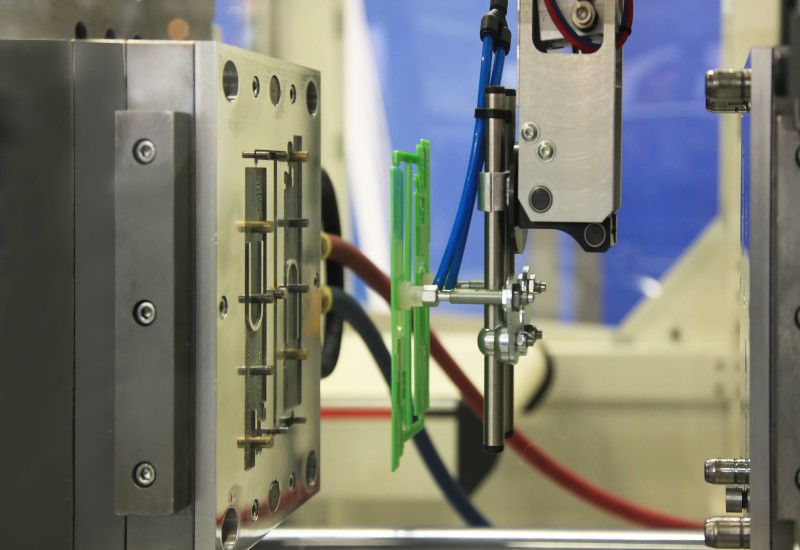
Injection molding is widely used to produce plastic components for a broad range of commercial and industrial applications. By injecting molten plastic into a mold and allowing it to cool and solidify, manufacturers can create consistent parts with detailed geometries and repeatable dimensions.
For companies evaluating injection molding services, the process can offer several practical advantages. The right approach depends on the part, material, production requirements, and other project-specific factors, but understanding the fundamentals can help manufacturers determine whether injection molding is a good fit.
Common Industries Benefited by Injection Molding
Injection molding is used across many industries because the process can accommodate a wide variety of component designs and plastic materials. Applications may include functional components, housings, covers, fittings, and other molded parts. Common industries include:
- Automotive: Molded plastic components are used throughout vehicles, including interior and under-the-hood applications.
- Medical: Plastic molding can be used for certain medical and laboratory components, depending on the material, design, and applicable requirements.
- Electronics: Housings, covers, connectors, and other components can be produced through injection molding.
- Consumer Products: Manufacturers use molded plastics for numerous everyday products and components.
- Industrial Equipment: Injection molding can produce a variety of plastic parts used in machinery and equipment.
The specific capabilities and material requirements vary from project to project, so manufacturers should evaluate their needs with an experienced molding partner.
Advantages of Injection Molding
There are several reasons manufacturers consider injection molding for plastic component production. The following injection molding benefits can make the process well suited to projects where consistency, repeatability, and design flexibility are important.
Repeatable Part Production
Once appropriate tooling and processing parameters are established, injection molding can produce repeated parts with consistent characteristics. This repeatability is particularly useful when a manufacturer needs multiple components that must work together or meet defined design requirements.
Design Flexibility
Injection molding can accommodate a range of shapes and features. Properly designed molds can incorporate details such as openings, ribs, bosses, textures, and other geometry.
This flexibility allows engineers to develop components around their functional requirements rather than relying solely on simple shapes.
Efficient Production
Injection molding can be well suited to production environments where the same component needs to be manufactured repeatedly. Once the mold is prepared and the process is established, the manufacturing cycle can be repeated to produce additional parts.
The actual production efficiency depends on factors such as part design, material, tooling, equipment, and processing conditions.
Material Options
A range of thermoplastic materials can be used for injection molding. Different plastics offer different characteristics, which means material selection can be tailored to the requirements of the finished component.
Engineers may consider properties such as strength, flexibility, impact resistance, temperature performance, chemical resistance, dimensional stability, and appearance when selecting a material.
Consistent Appearance
Injection molding can provide consistency in the appearance of repeated components when the tooling, material, and process are appropriately controlled. Surface textures and other mold features can also be incorporated into the part design.
For components where appearance matters, these considerations can be addressed during product and mold development.
Complex Part Geometries
One of the important injection molding advantages is the ability to produce parts with more involved geometries. Features that might require multiple manufacturing steps with another process may potentially be incorporated into a molded component.
However, complexity still needs to be evaluated from a manufacturability perspective. Part geometry, draft, wall thickness, tooling, and other factors all influence what can be produced effectively.
Reduced Secondary Operations
A thoughtfully designed molded part may incorporate multiple features directly into the component. This can reduce the need for certain secondary operations after molding.
Whether secondary work can be eliminated depends on the individual part and its requirements, but considering these possibilities during design can help streamline the manufacturing approach.
Repeatable Tooling
The mold is a central part of the injection molding process. Once suitable tooling has been developed, it can support the production of repeated components over the course of a project, subject to appropriate maintenance and operating conditions.
Tooling requirements should be considered early because mold design is closely connected to the geometry and manufacturing requirements of the part.
Selecting the Right Injection Molding Approach
The benefits of injection molding do not automatically make it the right process for every plastic component. Manufacturers should consider factors such as the intended application, material requirements, part geometry, production volume, tooling considerations, and quality expectations.
Working with an experienced provider of custom injection molding services can help manufacturers evaluate these factors before production begins. Early communication between product designers and the molding team can also help identify potential manufacturability concerns.
Design Plastics works with manufacturers seeking plastic molding solutions for their specific applications. If you are evaluating a new component or looking for injection molding services for an existing product, contact Design Plastics to discuss your project and determine whether injection molding fits your manufacturing requirements.
Frequently Asked Questions About Injection Molding
Manufacturers often have questions about the capabilities and practical applications of injection molding. Here are answers to several common questions.
Is Injection Molding Suitable for Complex Product Designs?
It can be. Injection molding can accommodate many detailed geometries and features, but the design must still account for factors such as draft, wall thickness, material behavior, tooling, and part removal.
Which Industries Commonly Use Injection Molding?
Injection molding is used across industries including automotive, medical, electronics, consumer products, and industrial equipment. The specific applications depend on the manufacturer’s requirements and the capabilities needed for the component.
What Type of Plastic Materials Can Be Used in Injection Molding?
Various thermoplastic materials can be processed through injection molding. The appropriate material depends on the required characteristics of the finished component and the conditions in which it will be used.
Is Injection Molding Environmentally Friendly?
The environmental impact of injection molding depends on factors such as material selection, product design, production efficiency, part lifespan, and end-of-life considerations. Designing durable components and evaluating material use can be important parts of a responsible manufacturing strategy.