Full Service Manufacturing
Find Two-Shot Molding Services in the USA
Product designers are always seeking methods by which they can achieve performance, appearance, and manufacturing efficiency all in one component. In a number of situations, combining several materials or colors during the manufacturing process can make assembly simpler and enhance the functionality of the product. If your company is using or requires two-shot injection molding, get in touch with Design Plastics to find out more about our detailed processes. With more than 50 years of experience in manufacturing, we assist manufacturers in assessing practical solutions for complex plastic components.
What Is Two-Shot Molding?
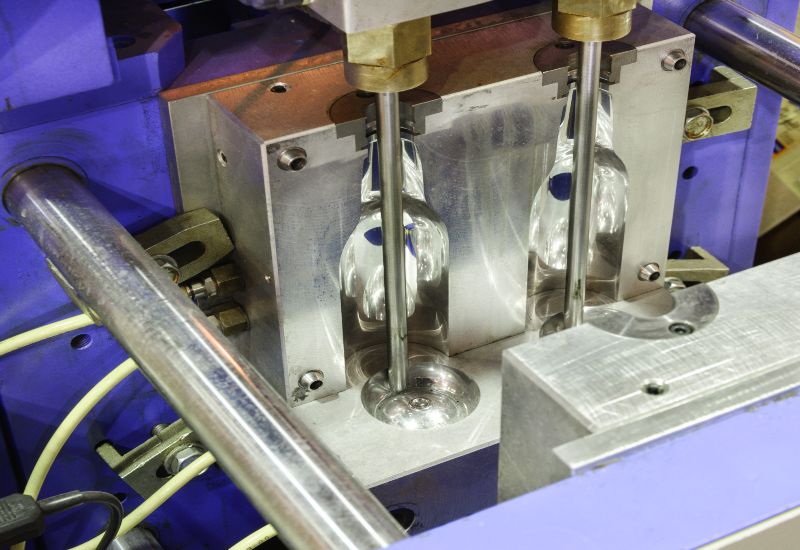
Two-shot molding is a manufacturing method which involves producing a single component by injecting two separate batches of material during a single production cycle. The first material forms the initial base, and the second is then shaped onto or around this first material. This specific type of injection molding is preferable when manufacturers want to combine different colors, textures, or material characteristics into one piece without having to use secondary assembly operations.
Design Considerations for Two-Shot Molding
Successful projects begin with careful engineering and product development, and factors such as material compatibility, the shape of the parts, tooling design, and the production objectives all affect whether two-shot molding is suitable for a given application. It is useful for designers, engineers, and the manufacturing teams to work together at an early stage in order to spot possible problems before tooling starts. Important design considerations include:
- Material Compatibility – Both materials must work together to support the intended performance requirements.
- Part Geometry – Product dimensions and features influence tooling complexity and manufacturability.
- Bonding Requirements – Material interaction may affect how well the two molded sections connect.
- Tool Design – Mold design plays a central role in part quality and production efficiency.
- Production Volume – Anticipated quantities help determine whether the process aligns with long-term manufacturing goals.
How Two-Shot Molding Works
Even though the process seems simple, it is necessary to carry out careful planning and control of the process. The two-shot injection molding process makes use of special tooling, which enables two materials to be molded in sequence into a single finished component. Manufacturers usually choose this method when they wish to decrease the number of assembly steps while at the same time keeping the materials in precisely the right position. Key stages typically include:
- First Material Injection – The initial substrate is molded to create the foundation of the component.
- Part Transfer – The part moves into position for the second molding stage.
- Second Material Injection – A second material is applied to specific areas of the component.
- Cooling and Stabilization – The completed part cools while maintaining its intended shape.
- Inspection and Quality Review – Finished parts are evaluated to verify consistency and performance expectations.
Future Trends in Two-Shot Molding
As product designs become more sophisticated, manufacturers continue exploring ways to combine performance and efficiency within individual components. Advancements in materials, tooling technologies, automation, and engineering software may expand the capabilities of two-shot plastic molding in the years ahead. Design Plastics collaborates with customers in a variety of sectors, including aerospace, automotive, agriculture, government, medical, retail, and industrial manufacturing, to assist them with the development of custom plastic components.
Discuss Your Project With Design Plastics
Each product brings with it its own set of challenges, covering everything from the choice of materials and the need for tooling to manufacturability and long-term production planning. services, tooling, custom injection molding, and the ability to take a prototype through to full production can help advance your project. Get in touch with our team now to talk about your particular application and find out how our engineering
Frequently Asked Questions
How Are Two-Shot Molding and Overmolding Different?
Two-shot molding typically combines two materials during a single, integrated molding cycle using specialized tooling. Overmolding generally involves molding one material over an existing substrate through a separate manufacturing step. The ideal approach depends on product design, materials, and production objectives.
Is Two-Shot Molding Suitable for High-Volume Production?
Yes. Many manufacturers use two-shot injection molding for high-volume applications because it can reduce secondary assembly requirements while supporting consistent production. Project-specific requirements should be evaluated during development.
What Products Are Commonly Made Using Two-Shot Molding?
Two-shot molding is frequently employed in cases where multiple colours, different material properties, better grip surfaces, or integrated design elements are needed. The specific applications will depend on the industry and the requirements of the product.
Can Two-Shot Molding Be Used for Soft-Touch Products?
Yes, it is possible for manufacturers to combine rigid substrates with softer materials in order to produce products that have an improved grip, greater comfort, or better user interaction. The final product depends on the materials chosen and the design requirements.
Can Two-Shot Molding Handle More Than Two Colors or Materials?
Some advanced manufacturing approaches can incorporate additional colors or materials beyond the standard two-shot configuration. The final result will likely depend on tooling design, equipment capabilities, production goals, and overall project complexity.
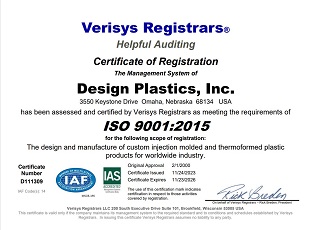
Design Plastics, Inc. has earned the prestigious ISO 9001 certification through Verisys Registrars®, a trusted auditing and certification body. This certification demonstrates the company’s commitment to maintaining the highest standards in quality management and operational excellence. By adhering to the rigorous requirements set forth by the ISO 9001 standard, Design Plastics, Inc. ensures that its products and services consistently meet customer and regulatory expectations. This certification reflects the company's dedication to continuous improvement, customer satisfaction, and producing high-quality custom injection-molded and thermoformed plastic products for worldwide industry applications. This achievement underscores Design Plastics Inc.'s focus on quality, precision, and sustainability in all aspects of their manufacturing process.
HQ & Omaha Plant
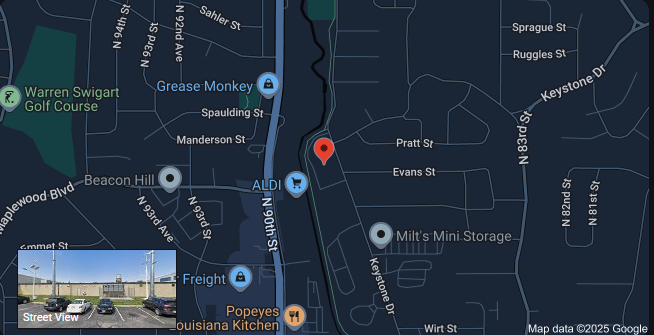
3550 Keystone Drive
Omaha, NE 68134
Blair Plant
9330 State Hwy 133
Blair, NE 68008